
wholesale cafe suppliers
now browsing by tag
Little Treat Culture: The Economy of Small Desserts
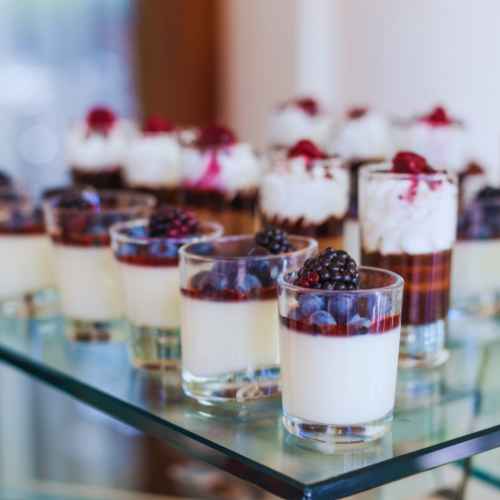
Has something shifted in how your customers think about dessert?
Where they once came in for one indulgent occasion (a birthday celebration, a weekend treat), many are now returning more frequently for something smaller, more intentional. A delicate macaron on a Tuesday afternoon. A single scoop of premium gelato between meetings. A handcrafted chocolate bonbon with their morning coffee. This pattern of “little treat culture,” which we’re seeing across dessert bars, cafés, and foodservice venues alike, reveals something significant about how consumers now view affordable luxury desserts in their daily lives.
This behavioural shift, what the industry calls the “Little Treat Economy,” represents far more than a passing trend. For those of us working in the dessert industry, understanding little treat culture gives us a real competitive advantage. When we recognise what’s driving these purchasing decisions, we can reshape our menus, our pricing, and our operations to meet customers where they are. The payoff? Higher customer frequency, stronger margins, and a business model that’s more resilient in uncertain times.
What Little Treat Culture Actually Represents
It’s tempting to dismiss this as another social media phenomenon, something that will fade as quickly as the last viral food trend. But the evidence suggests something deeper is happening.
At its heart, little treat culture represents a fundamental rethink of what dessert means. Historically, dessert was tied to occasions: celebrations, dining out, and special moments. Today, it’s becoming something different: a functional part of how people manage daily life, regulate their emotions, and mark moments of personal care.
The data reinforces this shift. Research shows that 65% of consumers now prefer smaller portions when it means they don’t have to compromise on taste. Rather than buying a large item that’s “good enough,” customers are actively seeking smaller dessert formats that feel premium. This reflects a broader movement away from “more is better” toward a philosophy of “better is better.”
Here’s the crucial insight: this isn’t about restriction or guilt. It’s about frequency. By making treats smaller and more accessible in price, customers remove the psychological barrier to purchasing. A $15 dessert requires deliberation. A $6 premium treat becomes an instinctive decision. And when those instinctive decisions happen twice a week instead of once a month, everything changes for our businesses.
The Psychology of Permission and Small Dessert Purchasing
Understanding the why behind these choices opens doors to smarter decision-making.
In an increasingly complex world, one that can feel overwhelming, unpredictable, and often beyond our control, people crave something different. They want small, manageable moments of genuine joy. They want to feel agency over their choices. A large dessert can feel heavy, both literally and emotionally. But a single artisan truffle or a bite-sized tartlet? That feels like a deliberate choice, a controlled indulgence, a moment they’ve given themselves.
This psychological driver is particularly strong among younger consumers. Gen Z snacking habits show that 57% of Gen Z purchase a weekly treat, with nearly a third indulging almost daily. But don’t assume this is a Gen Z phenomenon alone. The behaviour is spreading across age groups and demographics.
What matters most is the shift in purchasing mathematics. Traditional customers visit occasionally and spend substantially. But little treat customers visit frequently for smaller amounts. The maths reveal something counterintuitive: multiple small transactions can generate far more annual value than infrequent large ones. The frequency compounds dramatically.
They’re not just buying sugar. They’re buying a moment of respite, a small act of self-care that feels accessible and guilt-free.
Affordable Luxury in Uncertain Times
We can’t talk about this shift without acknowledging the economic reality our customers are navigating.
Economists have long tracked what’s called the “Lipstick Effect”: the observation that during economic uncertainty, people still spend on luxury items, but they shift toward smaller, more affordable options. They might postpone the holiday or the car purchase, but they’ll still invest in something that feels special and achievable.
In the food world, affordable luxury desserts have become the modern “lipstick.”
When major life milestones feel out of reach, when saving for a home, planning a wedding, or securing financial stability feels increasingly difficult, affordable luxury becomes one of the few accessible indulgences. A $9 premium pastry might seem pricey, but as an experience, as a moment of genuine quality in an uncertain world, it’s remarkably accessible.
This is why we see little treat culture thriving alongside cost-of-living pressures. It functions as a recession-resistant form of spending. The small indulgence validates the customer’s hard work without stretching their budget. And when we position our offerings thoughtfully, maintaining premium quality while making them accessible in price and format, we align our business directly with how people are managing their priorities in 2025 and going into 2026.
Shifting Menu Strategy & Dessert Formats
Understanding the psychology is valuable. But what does this actually translate to on your menu board and in your day-to-day operations?
The little treat culture trend asks us to reconsider two things: format and menu architecture. If your menu features only full-sized desserts, you’re effectively screening out the customer seeking smaller, more frequent indulgences.
1. The Power of Dessert Flights and Tasting Boards
When customers want variety without commitment, the “dessert flight” becomes your strongest tool. Mixed dessert plates, offering three to five small portions instead of one large one, have appeared 37% more frequently on menus over the past 18 months. Why? Because they solve a genuine customer problem.
A flight of three mini-gelato scoops or a tasting board of four bite-sized tartlets lets customers explore without the anxiety of choosing wrong. It feels more adventurous, less risky. It also elevates the perceived value: bundling small items creates a premium experience that customers readily pay for.
2. The Economics of Bite-Sized Treats
Small doesn’t mean inexpensive to produce or price. In fact, bite-sized dessert formats often support higher cost-per-gram economics.
Customers resist spending on mediocre full-sized desserts. But they readily invest in a single, exquisitely crafted macaron or a handmade chocolate truffle. This pricing power means we can work with better ingredients.
3. The Add-On Effect: Mini Desserts as Impulse Purchases
Here’s an underutilised opportunity: bite-sized treats are the ultimate add-on sale.
Research shows that customers purchasing small desserts alongside their main purchase, a coffee or a lunch item, spend noticeably more per visit. The small treat becomes irresistible. It’s the evolution of the “coffee and cake” pairing into “coffee and a tiny luxury.”
Train your team to position these items as optional additions. Make them visible at the register. Price them accessibly enough that they feel like a low-commitment choice. The margins on frequency matter more than the margins on individual items.
Positioning for the Future: Building Your Little Treat Culture Strategy
The little treat culture economy isn’t a signal to abandon your full-sized offerings. There will always be customers seeking the celebratory slice or the shared dessert.
But it is a signal to diversify your approach. To ask yourself: Do I have something for the customer who just wants a moment of joy on a Tuesday afternoon? Can I offer an accessible entry point that builds frequency?
When we embrace smaller formats intentionally, not as an afterthought, but as a strategic part of our menu, we’re not just selling less food. We’re offering permission. We’re giving customers a structured way to treat themselves regularly, transforming our venue from a special destination into part of their daily rhythm.
And in an economy where customers are cautious with larger purchases but hungry for small moments of quality, that shift might be the most valuable change we make.
Explore our range of dessert toppings and beyond to find the high-quality textures and flavours that will make your little treat menu unforgettable.
This article was reproduced on this site with permission from operafoods.com.au the “Wholesale Café Suppliers”.
See original article:- Little Treat Culture: The Economy of Small Desserts
Dessert Toppings: The Art of Pairing
Ever had a dessert so perfect it made you close your eyes for a second? That’s the magic of a great pairing. As a dessert bar owner, you already know these moments turn a first-time visitor into a lifelong fan. It’s not just about having great ice cream or a fantastic brownie; it’s about how you bring all the elements on the plate together.
We have been in the ingredients business for a long time, and have seen that the most successful dessert menus are built on thoughtful combinations. Toppings aren’t just a final sprinkle; they’re a crucial part of the flavour equation. Getting your dessert topping pairings right can elevate a good dessert to an unforgettable one. It’s an art form, but luckily, it’s one with some simple principles you can follow.
So, how do you become a master of the sweet symphony? Let’s break down the art of pairing and explore some classic and creative flavour combinations for desserts that will delight your customers.
Why Do Dessert Topping Pairings Matter?
Before we get into the delicious details, let’s talk about why this is so important for your business. A well-paired dessert does more than just taste good.
- It Creates a “Wow” Factor: A surprising combination always gets people talking.
- It Demonstrates Quality: Thoughtful pairings show that you’re a business that cares about the details. It signals craftsmanship and elevates your brand.
- It Justifies Premium Pricing: When a dessert is a carefully curated experience, customers are more willing to pay a premium for it.
- It Simplifies Customer Choice: By offering a few stellar “chef’s choice” pairings on your menu, you can guide customers towards profitable, high-turnover items.
Now, let’s get into the fun part. What are the secrets to a perfect pairing? It all comes down to two key ideas: balance and texture.
The First Rule of Pairing: Complement or Contrast
When it comes to flavour, you have two main paths you can take. You can either complement the base flavour by echoing its notes, or you can contrast it with something completely different to create a bold and exciting combination.
The Power of Complementary Flavours
This is the most intuitive approach. It’s about taking a flavour and amplifying it. You’re essentially layering similar flavour profiles to create a richer, deeper experience.
So, how does this work in practice?
- Chocolate on Chocolate: A rich chocolate brownie is a classic. How can you complement it? Instead of just more chocolate, think about different forms of it. A smooth, warm sauce adds moisture and a silky mouthfeel. Mini chocolate buttons can add a bit of bite.
- Caramel and Brown Sugar: If you have a dessert with brown sugar notes, like a sticky date pudding or an apple crumble, a caramel sauce is a natural fit. It has that rich, buttery flavour that enhances the dessert’s inherent sweetness without overpowering it.
- Fruity with Fruity: A scoop of raspberry sorbet becomes even more intensely fruity with a swirl of raspberry coulis and a sprinkle of raspberry powder. You’re giving the customer three different expressions of the same fruit.
The key to complementary pairing is to vary the texture or intensity. You don’t want it to be one-note.
The Thrill of Contrasting Flavours
This is where things get really interesting. Contrasting pairings create a sense of discovery and excitement. You’re waking up the palate by introducing an unexpected flavour that cuts through or balances the base.
Here are some classic contrasting flavour combinations for desserts:
- Sweet and Salty: This is probably the most famous example. The saltiness in a salted caramel sauce or sprinkled on pretzels cuts through the sweetness of a dessert, making it less cloying and more addictive. Try a salty pretzel crunch on top of a super-sweet caramel ice cream.
- Sweet and Sour/Tart: A rich, dense cheesecake can feel quite heavy. Pairing it with a sharp, tangy lemon curd or a passionfruit coulis provides a burst of acidity that cleanses the palate and makes you want another bite.
- Rich and Fresh: Think about a decadent, dark chocolate lava cake. Now, imagine it with a sprig of fresh mint and a few fresh raspberries on the side. The freshness of the mint and the slight tartness of the berry lift the whole dessert.
Don’t be afraid to experiment here. A little bit of contrast can make your desserts far more memorable.
The Second Rule: It’s All About Texture
Flavour is only half the story. A dessert that is all one texture—all soft or all crunchy—can be a bit boring. Great pairings play with a variety of textures to create a more dynamic and satisfying experience.
When thinking about your ice cream topping ideas, consider these textural elements:
1. The Smooth and Creamy
This is your foundation for luxury. A smooth, velvety sauce or topping adds a sense of indulgence.
- Hot Fudge Sauce: The classic for a reason. There’s nothing quite like the combination of warm, gooey fudge sauce melting over cold, firm ice cream.
- Marshmallows: Soft, pillowy Rainbow Mini Marshmallows provide a delightful chewiness that contrasts beautifully with both creamy ice cream and crunchy toppings. Imagine them in a rocky road sundae, paired with nuts and chocolate sauce. The textural variety is what makes it so good.
2. The Crunchy and Crispy
Crunch adds excitement and a satisfying bite. It’s the textural element that people often crave the most.
- Nuts and Praline: Toasted almonds, candied pecans, or a crunchy peanut praline are fantastic additions to almost any dessert.
- Crumbled Biscuits or Cookies: Think crushed cookies, chocolate crumble, or buttery shortbread pieces. They add a familiar flavour and a wonderful sandy or chunky texture.
- Honeycomb: Adds a light, airy crunch that dissolves in your mouth with a sweet, slightly burnt sugar flavour. Smash chocolate honeycomb into smaller pieces to sprinkle over ice cream or mousse, or leave it in larger chunks for a more dramatic textural contrast.
3. The Chewy and Gummy
This category adds a playful, lingering texture to your desserts.
- Lollies: Gummy bears, sour worms, or chopped jelly lollies can add a fun, chewy element. This works especially well for kids’ desserts or a “build-your-own” sundae bar.
- Caramel or Toffee Pieces: Small chunks of chewy caramel or hard toffee provide little bursts of concentrated flavour and a satisfying chew. Caramel popcorn is an easy win.
Putting It All Together: Some Winning Combinations
So, how do we combine all these ideas? Let’s build a few perfect pairings for common dessert bases.
For a Warm Chocolate Brownie:
- Flavour: Complementary.
- Texture: Smooth and Creamy, Crunchy and Crispy
- The Pairing: A scoop of classic vanilla bean ice cream, a generous drizzle of chocolate sauce to echo the brownie’s core flavour, and a sprinkle of crunchy caramel popcorn for textural contrast.
Simple, yet very, very effective.
For a Scoop of Strawberry Ice Cream:
- Flavour: Complementary
- Texture: Chewy and Gummy, Crunchy and Crispy
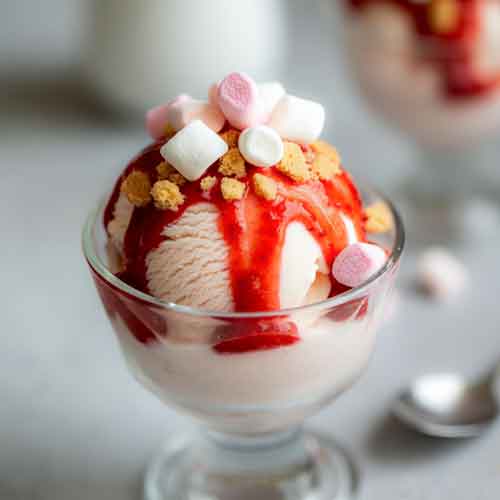
- The Pairing: Add a swirl of strawberry sauce to amplify the fruit flavour. Then, add a handful of our soft, chewy Pink and White Mini Marshmallows and some crunchy, crumbled shortbread biscuit. It becomes a delicious take on a strawberry shortcake.
Again, it’s simple and super easy, yet truly elevating.
Your Turn to Play
The best way to become an expert at pairing is to start experimenting. Think of your kitchen as a flavour lab. Taste different combinations. Ask your staff for their opinions. Most importantly, listen to your customers.
Start by looking at your menu and your current topping selection.
- Identify one dessert that could be elevated with a better pairing.
- Think about its core flavour and texture. Does it need a complementary or contrasting flavour? Does it need crunch, chew, or creaminess?
- Choose one or two new toppings to create a “featured pairing.”
The art of pairing is your secret weapon. It’s how you add your unique signature to every dessert that leaves your kitchen and creates those special moments that keep your customers coming back for more.
Ready to find the perfect partners for your desserts? Browse our extensive wholesale range of dessert toppings.
This article was reproduced on this site with permission from operafoods.com.au the “Wholesale Café Suppliers”.
See original article:- Dessert Toppings: The Art of Pairing