
counter confectionery
now browsing by tag
How to Stock and Sell Loose Lollies from Your Cafe Counter
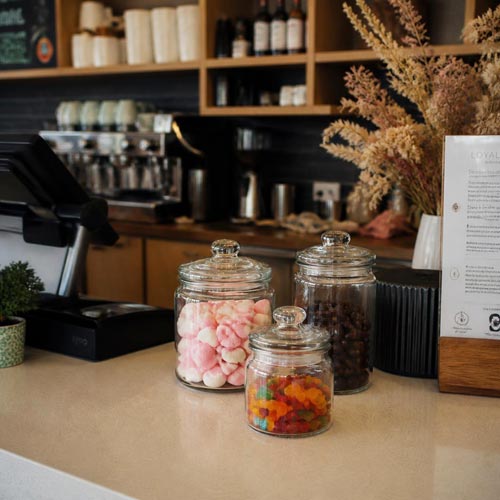
If you have read the first two articles in this series, you already know the argument. Australian cafe culture runs on personal service, and counter confectionery works best when it fits that pattern, passing through the person serving rather than around them. A jar of loose lollies behind the counter does this naturally. A branded packet on a stand does not. The format is more hospitable and easier on the ethics of the impulse sale. A two-dollar transaction becomes a small moment of care that the customer, usually a parent watching their child be attended to, actually notices.
This third article is the practical one. It walks through every decision between choosing to stock loose lollies and handing the first bag to a child, from what to put in the jars to how to price what comes out of them.
What Loose Lollies Should a Cafe Stock?
The loose lolly counter does not want range. It wants familiarity. You are not running a lolly shop. You are offering a small, incidental pleasure at the end of a coffee order, and the product needs to be something a child can point at and a parent can say yes to without thinking.
This means simple, recognisable sweets, such as freckles, snakes, or milk bottles. The kind of thing that does not need explaining. A jar of something unfamiliar or artisanal will sit there looking interesting while a jar of freckles empties itself twice a week.
Two to three jars is the right number for most cafes. One is too few to create the impression of a selection. Four or more starts to look like a confectionery business rather than a side offering. Three jars behind the counter, each with something different, gives a child just enough to choose from without the decision becoming an event.
Pick for contrast. One chocolate item, one gummy item, one something else. Our previous example of freckles, snakes, and milk bottles covers three different textures, colours, and appeal profiles without overlapping. Rotate one jar occasionally if something stops moving, but you do not need to overthink it.
How Should You Buy Bulk Lollies for a Cafe?
A cafe doing reasonable family trade can move between one and three kilograms of loose lollies a week across two or three jars. That is not a large volume, but it is steady, and it is the kind of repeat order that suits buying in bulk.
Order enough to keep the jars looking full without sitting on stock for months. A one-kilogram bag of freckles should keep a jar stocked for a week or two. A quieter cafe, longer. The risk is not spoilage, since most bulk confectionery has a long shelf life. It is staleness of appearance. Lollies that have been in a jar for a long time start to look tired, and a jar that looks tired works against you. Better to stock a smaller quantity and refill more often than to buy a case and watch it age on the shelf behind the counter.
How Should You Store Loose Lollies?
Loose lollies dispensed by a staff member behind the counter are handled the same way as any other unwrapped food item in a cafe. Tongs or a scoop, clean hands, a jar with a lid. You are not asking customers to reach into a communal bowl. You are asking a staff member to put lollies into a bag, which is operationally no different from putting a biscuit on a saucer or a marshmallow on a hot chocolate.
Keep the jars sealed when not in use. Use jars with lids that come off easily but do not sit open between sales. Glass looks better than plastic and keeps product fresher, but it is heavier and breaks. Decide based on your counter space and how often the jars move. A scoop or a pair of tongs lives next to or inside the jar.
Paper bags, small ones like a lolly shop would use, cost almost nothing in bulk and finish the experience properly. A paper bag matters. It is the difference between being handed lollies and being given a bag of lollies, and children understand this distinction instinctively.
Store backup stock in a cool, dry place away from direct sunlight. Sealed bags in a cupboard will do. Nothing about this requires dedicated storage infrastructure. If you have room for extra coffee cups, you probably have room for a bag of gummies.
How Should You Price Counter Lollies?
Simply and visually. The price needs to be obvious before the child asks for anything, because the parent’s willingness to say yes depends almost entirely on knowing what they are agreeing to. A small sign on or next to the jar removes the moment of tension where a parent has to ask how much before deciding.
There are two pricing models that work. Per-item pricing, where each lolly costs a set amount and a child picks three or five or however many they want, recreates the old milk bar mechanic most faithfully. It also makes the mental arithmetic easy for a parent watching the count. Bag pricing, where a small bag costs a flat rate regardless of what goes in it, is faster for staff and avoids the counting. Either works. Pick the one that suits your counter speed.
Margins on loose confectionery sold this way are strong. Bulk lollies bought wholesale cost a fraction of what you charge per piece or per bag, and the labour involved is negligible because your staff are already standing at the counter. This is not a loss leader or a goodwill gesture. It is a genuinely profitable line that happens to cost almost nothing to run.
Is a Cafe Lolly Display Worth the Effort?
A jar of lollies behind the counter is not a revenue strategy. It is a two-dollar add-on that happens several times a day, costs very little to stock, requires no additional equipment, and plugs directly into the service interaction your staff are already having. It will not transform your business. But it will give your counter the small, repeatable moment of hospitality that the second article in the series described, and it will do it at a margin that makes the effort worthwhile.
Stock your counter with simple, familiar sweets bought in bulk. Browse Opera Foods’ bulk lollies range. Loose lollies ready to count into a bag, delivered in the volumes that suit a cafe.
This article was reproduced on this site with permission from operafoods.com.au the “Bulk Lolly Suppliers”.
See original article:- How to Stock and Sell Loose Lollies from Your Cafe Counter
What the Milk Bar Knew About Loose Lollies That Supermarkets Forgot
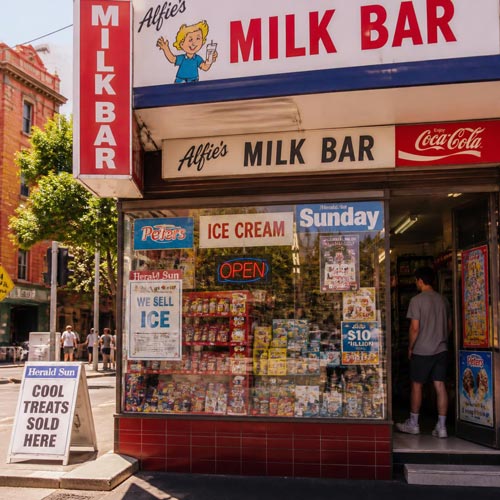
Before confectionery became a packaged product, if you wanted lollies in Australia, someone had to get them for you. You walked into a milk bar or a corner shop, you looked at the rows of jars or the boxes behind the counter, and you told the person standing there what you wanted. They reached for it, counted it or weighed it, put it in a paper bag, and handed it to you. That was how confectionery was sold.
This is the second in a three-part series on counter confectionery for cafes. The first looked at the ethics of the impulse sale and how cafes can stock a display that works without leaning on pester power.
This article looks at how that model worked, what happened when confectionery moved to the shelf, and why a cafe that sells lollies loose from a jar is getting something out of the sale that a branded packet can never deliver.
How Did the Milk Bar Lolly Counter Work?
The milk bar lolly counter was not a display you browsed and took from. It was a counter in the old sense, a surface with someone on the other side of it whose job was to serve you. The sweets were behind them. You could see them, but you could not reach them. If you wanted freckles, you said so, and someone put freckles in a bag. If you were a kid with twenty cents, you stood there and made your choices one at a time: three of those, two of those, one of those. The person behind the counter kept count, hovering with the bag open, waiting for the next decision. It was slow and personal and completely ordinary. Every suburb had a version of it.
What made the format work was not the product. You could buy the same lollies elsewhere. It was the fact that someone stood between you and the sweets and did the work of assembling your purchase. That tiny piece of labour, the reaching and counting and bagging, turned a sale into an interaction. You had to speak to someone. They had to pay attention to you. For a child, this was significant. An adult who was not your parent was listening to you, responding to your requests, treating your twenty-cent transaction with a degree of seriousness. It was, in miniature, being served.
Why Did Loose Lollies Disappear from the Counter?
The lolly counter disappeared alongside the milk bar, squeezed out by supermarkets and convenience stores through the 1980s and 1990s. Confectionery moved off the counter and onto the shelf. It became a packaged product, branded and wrapped and designed to be picked up without assistance. The person behind the counter was no longer necessary, and you did not need to ask for anything. You chose, you grabbed, you paid.
This was more efficient, obviously. It was also the moment confectionery stopped being dispensed and started being distributed. The difference sounds like semantics, but it changed what happened between the product and the customer. Distribution is a logistics problem: get the right product to the right shelf at the right time. Dispensing is a service act: give someone what they asked for. One requires supply chain, the other a person.
When confectionery moved to the shelf, it also moved to the wrapper. The product now had to sell itself, because nobody else was going to sell it for you. This is where the packaging arms race began, with the cartoon mascots and bright colours and visual language designed to catch a child’s eye from across an aisle. The engineering that the first article in this series described, where placement and packaging work together to trigger a request from a child, is a direct consequence of removing the person from the transaction. When nobody is serving you, the product has to do its own work.
Why Do Some Cafes Still Sell Lollies from a Jar?
The dispensing model did not vanish entirely. It persists in a handful of dedicated lolly shops, mostly operating as nostalgia experiences. But it also survives, in a smaller and less self-conscious way, in cafes.
A cafe that keeps a jar of lollies on the counter and sells them loose is not, in most cases, thinking about any of this. It has a jar there because it is a cheap, easy way to capture a small add-on sale. But what it has actually done, whether it realises it or not, is recreate the essential mechanic of the old lolly counter. The sweets are behind the counter and the customer cannot help themselves. Someone has to be asked, and someone has to do the small work of putting lollies into a bag.
When the person asking is a child, and it usually is, the exchange has a particular quality. A kid pointing at a jar and holding up fingers is making a request. The person behind the counter fulfilling that request is performing a small act of attention. The parent sees it happen. None of this takes more than thirty seconds, and none of it costs more than a couple of dollars. But it is, structurally, the same thing that made the milk bar lolly counter work: a person standing between the product and the customer, doing a small piece of visible labour that turns a sale into a moment of being looked after.
Why Does the Loose Lolly Format Work in a Cafe?
The old dispensing model was not designed as a customer experience strategy. It was simply how things were sold before self-service became the norm. Somebody had the stock, and you asked them for what you wanted. But the format carried an embedded piece of hospitality logic that only becomes visible when you compare it to what replaced it.
Dispensing requires attention. You cannot dispense a sweet to someone without looking at them, listening to them, and responding to what they asked for. Self-service requires none of that. A branded packet on a stand completes its journey from shelf to customer without a single moment of human contact. It is frictionless, and that frictionlessness is exactly what modern retail optimises for.
Cafes are not modern retail. They are in the business of the opposite, creating friction, in the good sense, at every stage of the visit. A barista who remembers your order, a waiter who checks in, a cook who sends out something that looks like it was made by a person. These are all forms of deliberate, productive friction. Small human moments that slow the experience down enough for the customer to feel attended to.
A jar of lollies dispensed from behind the counter fits this logic. A branded packet grabbed from a stand does not. The jar is a piece of old technology that happens to do exactly what hospitality is supposed to do: put a person between the product and the customer, and make that person’s involvement feel like care.
The dispensing format works best with simple, familiar sweets sold in bulk. Ready to order wholesale? Browse Opera Foods’ bulk lollies range.
This article was reproduced on this site with permission from operafoods.com.au the “Bulk Lolly Suppliers”.
See original article:- What the Milk Bar Knew About Loose Lollies That Supermarkets Forgot